
It's a sunscreen that grows on trees.
Mamaku Black Fern
Could it be New Zealand's best-kept beauty secret? We think so. And we think it's time more people knew about it.
Meet the giant of Aotearoa's forests.
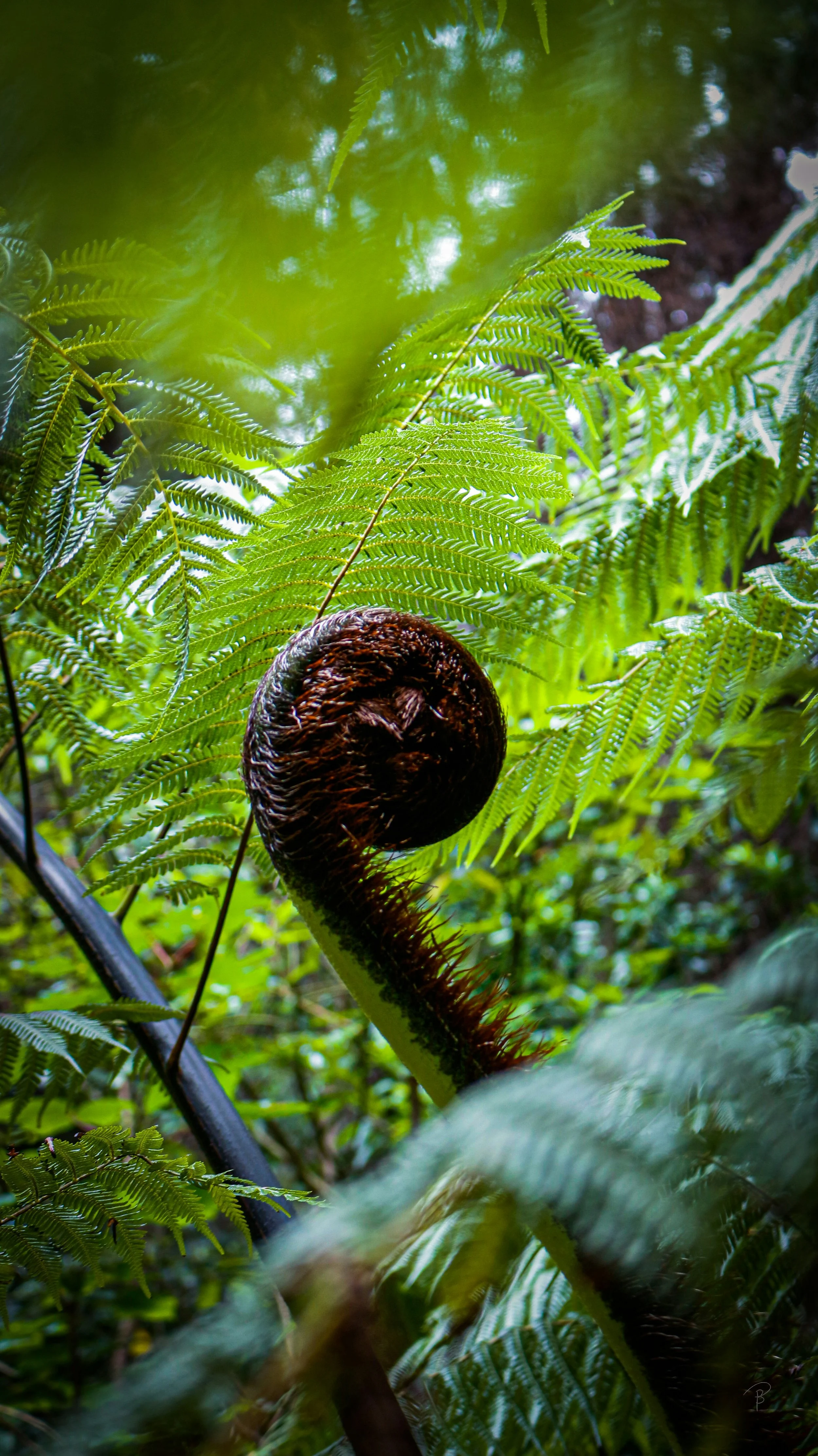
The Mamaku black tree fern — Sphaeropteris medullaris — has been growing in these islands for over 100 million years.
It stands up to 20 metres tall, with frond spreads of up to 14 metres, recognisable by its jet-black stems and the distinctive hexagonal scars that mark its trunk like a living map. It is, in every sense, a survivor.
To sustain its extraordinary height under New Zealand's harsh, high-UV skies, the Mamaku evolved to produce heavy volumes of gelatinous sap — an internal water-retention system that keeps it hydrated even in the most punishing conditions. It was also, not coincidentally, the very first plant to grow back after landslips and deforestation. Resilient doesn't quite cover it.
What Māori knew — long before the scientists arrived
To Māori, the Mamaku is a gentle, nurturing plant — an embodiment of new growth. Its sap was traditionally used to soothe sunburn, insect bites, rashes, eczema, and shingles. The soft inner core of young fronds was crushed and cooked into a poultice to heal deep wounds, draw out boils, and reduce infection. Liquid preparations eased sore throats and aided mothers recovering from childbirth. It was even used as an emergency food source.
In other words: Māori had a comprehensive skincare and wellness range growing in the forest. It just didn't come in a jar.
What modern science is now confirming
Mamaku extract is rich in complex, high-molecular-weight polysaccharides. Applied to the skin, these molecules form an invisible, flexible network that helps tighten, lift, and firm the skin's surface — a natural alternative to synthetic anti-ageing polymers. Its mucopolysaccharides have exceptional water-binding capabilities, helping to plump skin cells and reduce water loss through the day.
Unique biopolymers from the plant's embryonic growth zone are also being studied for their potential to support the skin's own collagen and elastin production. Ongoing research by New Zealand science institutes, including AgResearch, continues to explore Mamaku's potential to help even out skin tone.
Papatūānuku - Mother Earth - as always, got there first.
References: agresearch.co.nz | ourarchive.otago.ac.nz | nativeplants.nz