
A treasure of the deep
Red Seaweed
A taonga - treasure - of the deep. And your skin's new best friend.
Aotearoa New Zealand is home to roughly 550 distinct species of native red seaweed — and while that might not sound like the opening line of a great beauty story, bear with us.
Unlike green or brown seaweeds that flourish in shallow water, native red seaweeds evolved to thrive at depths of up to 25 metres. To photosynthesise in near-darkness, they developed a unique red pigment that acts as both a specialised light harvester and an evolutionary shield — neutralising the high-UV radiation that penetrates New Zealand's famously clear southern waters.
Living along Aotearoa's rugged, wave-battered coastlines, these remarkable algae also evolved an incredibly dense, flexible cellular wall rich in sulphated polysaccharides — a slippery, protective matrix that stops them from tearing against rocks or dehydrating when exposed at low tide.
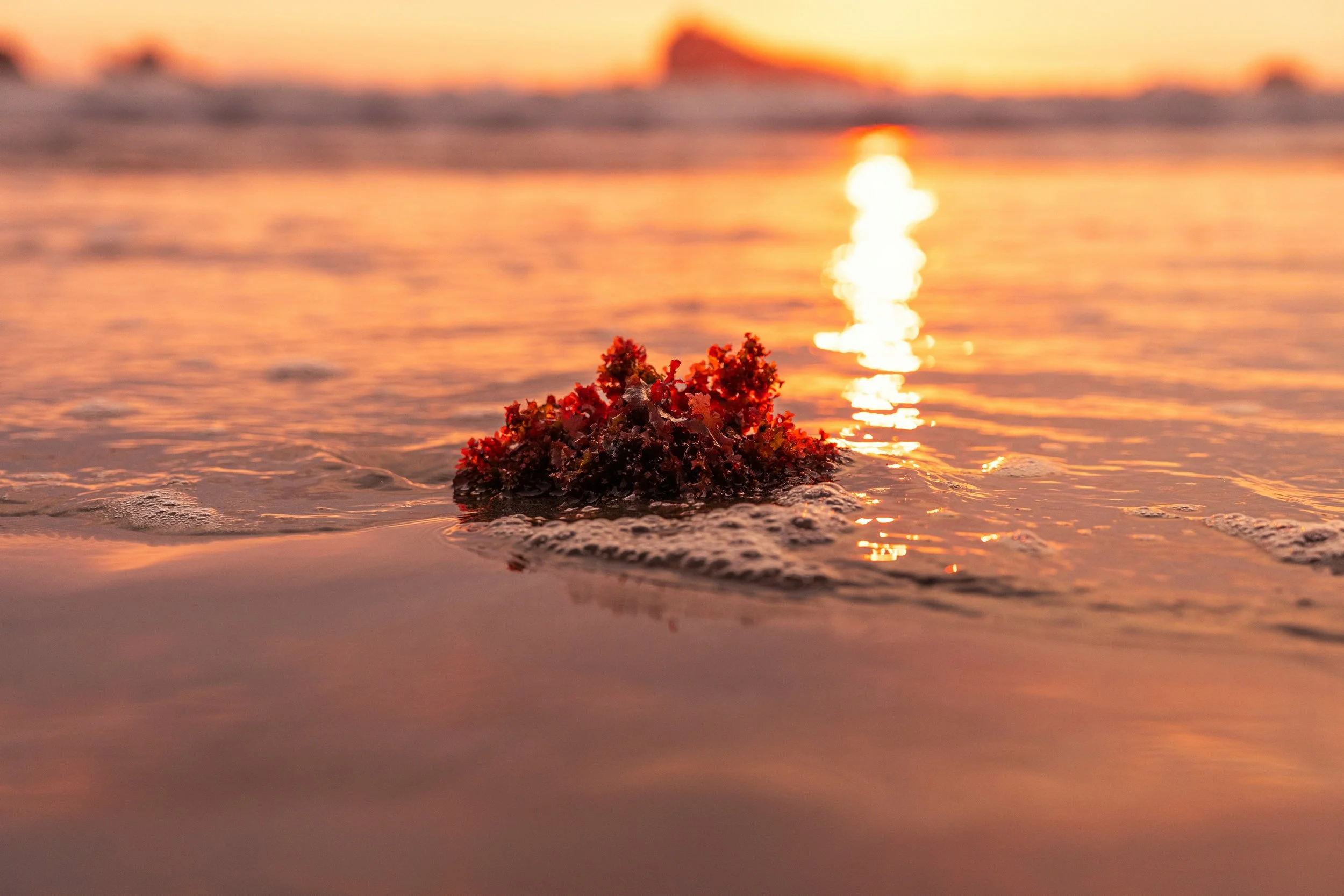
Centuries of survival under pressure. Sound familiar?
What Māori knew
Māori hold a deep, reciprocal relationship with Te Moana — the ocean — and traditionally classified native red seaweed as a taonga, a prized coastal treasure. Karengo was harvested from coastal rocks after winter storms and dried as a mineral-rich food, valued for its high content of vitamins, iodine, and amino acids.
Applied directly to the skin, wet red seaweed fronds served as a cooling, hydrating wrap — reducing inflammation, healing burns, and soothing skin irritated by the elements. The same plant feeding people and healing skin, all at once. The original multi-tasker.
What modern science is now confirming
Red seaweed is exceptionally rich in sulphated glycosaminoglycans — natural marine biopolymers that mimic the skin's own moisture-retaining structures, forming a fine network over the skin's surface that helps seal in hydration. Research into Aotearoa's red algae extracts has explored their ability to support the skin's natural aquaporin channels — the microscopic pathways that help transport water within skin cells — which may assist with deep, lasting hydration.
The intense carotenoids and phytonutrients the algae evolved to survive high UV exposure are also being studied for their skin-brightening and antioxidant potential, alongside early research into their support of the skin's natural collagen-producing processes.
The ocean has been doing this for millennia. We just finally worked out how to bottle it responsibly.
References: pmc.ncbi.nlm.nih.gov | oatext.com